
The orthodontist will determine the best type of retainer for the patient based on their individual needs and the type of orthodontic treatment they received. It is important to wear the retainer as directed by the orthodontist to ensure that the teeth remain in their corrected positions.
Over time, the retainer may need to be adjusted or replaced to maintain its effectiveness. It is also important to keep the retainer clean and free of debris to prevent bacteria and plaque buildup.
Overall, orthodontic retainers are an important part of the orthodontic treatment process, as they help to ensure that the teeth remain in their corrected positions and the results of the treatment are long-lasting.
Είδη Retainers
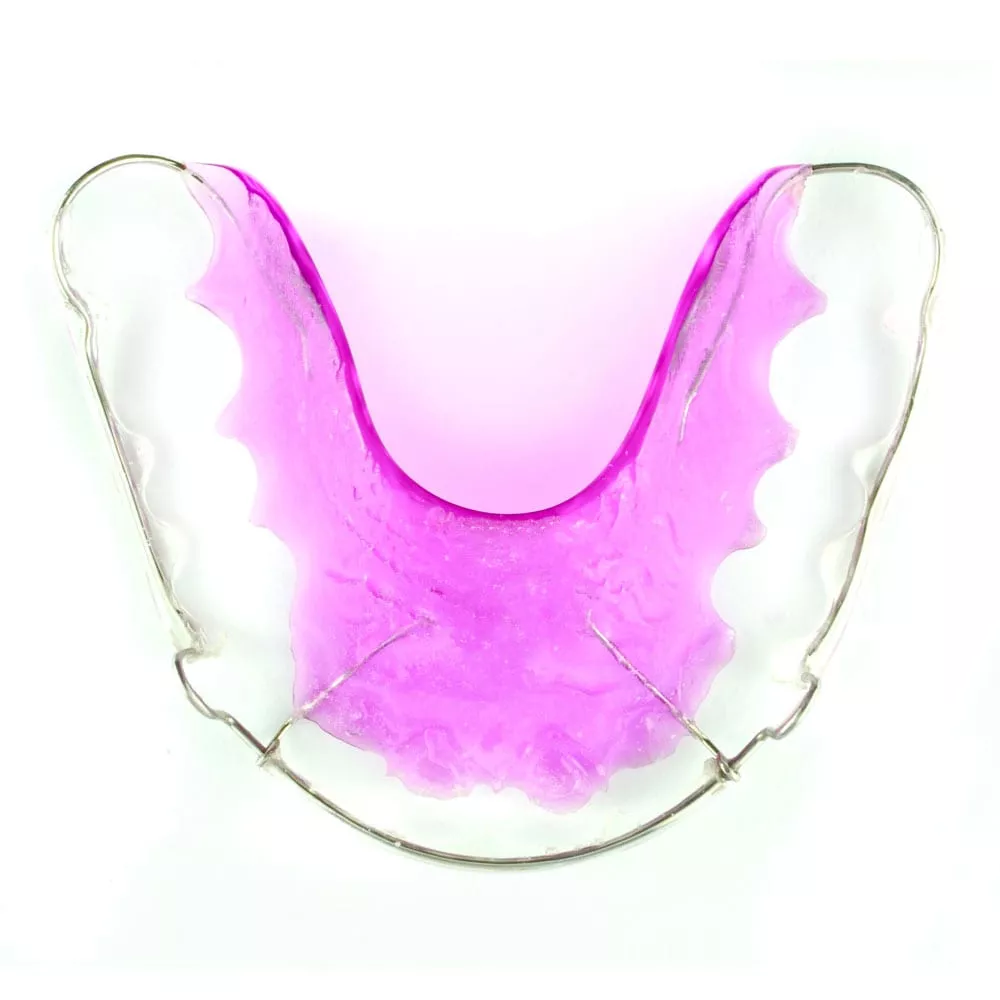
Wire Retainers
Wire retainers, also known as Hawley retainers, are a type of removable orthodontic retainer that are made from a combination of metal wire and acrylic material. They are typically used to maintain the corrected position of the teeth after orthodontic treatment, such as after the use of braces.
Wire retainers are custom-made to fit the patient’s teeth and are designed to be worn for a specific amount of time each day or overnight, depending on the patient’s individual needs. They are designed to be durable and long-lasting, and can be adjusted as needed to maintain their effectiveness over time.
One of the advantages of wire retainers is that they are typically less expensive than clear retainers, making them a more affordable option for some patients. They are also generally more durable than clear retainers, and can be more effective at maintaining the position of the teeth in cases where there is a risk of significant shifting.
However, wire retainers can also be more noticeable than clear retainers, which may be a concern for some patients. They may also be more difficult to clean and maintain, as they can trap food particles and debris more easily than clear retainers.
Overall, wire retainers can be an effective and affordable option for maintaining the results of orthodontic treatment. The orthodontist will determine the best type of retainer for the patient based on their individual needs and the type of orthodontic treatment they received.
Clear Retainers
Clear retainers, also known as clear aligner retainers or Essix retainers, are a type of removable orthodontic retainer that are made from clear plastic material. They are typically used to maintain the corrected position of the teeth after orthodontic treatment, such as after the use of clear aligners or traditional braces.
Clear retainers are custom-made to fit the patient’s teeth and are designed to be worn for a specific amount of time each day or overnight, depending on the patient’s individual needs. They are designed to be nearly invisible when worn, which makes them a popular option for patients who are concerned about the appearance of their retainer.
In addition to their cosmetic benefits, clear retainers are also generally more comfortable than traditional wire and acrylic retainers. They are less likely to irritate the gums or soft tissues of the mouth and can be easily removed for cleaning and oral hygiene.
However, like all types of orthodontic retainers, clear retainers require regular cleaning and maintenance to ensure that they remain effective. The patient should brush and rinse the retainer daily, and periodically soak it in a cleaning solution to remove any buildup or debris.
Overall, clear retainers can be an effective and comfortable option for maintaining the results of orthodontic treatment, and they offer the additional benefit of being nearly invisible when worn.


Fixed Retainers
Fixed retainers, also known as bonded retainers, are a type of orthodontic retainer that is permanently attached to the back of the teeth. They are typically used to maintain the corrected position of the lower front teeth after orthodontic treatment, such as after the use of braces.
Fixed retainers consist of a thin wire that is attached to the back of the teeth using dental cement. The wire is designed to be nearly invisible when worn and is designed to stay in place for several years.
One of the advantages of fixed retainers is that they are always in place and do not require the patient to remember to wear them or take them in and out. This makes them an effective option for patients who may be forgetful or have difficulty following a prescribed retainer wear schedule.
However, fixed retainers can be more difficult to clean than removable retainers, as they cannot be removed for brushing and flossing. Patients with fixed retainers may need to use special tools, such as floss threaders, to clean between the teeth and the wire.
Fixed retainers can also be more expensive than removable retainers, as they require a more involved placement procedure and the use of dental cement.
Overall, fixed retainers can be an effective option for maintaining the results of orthodontic treatment, particularly in cases where there is a high risk of teeth shifting back to their original positions. The orthodontist will determine the best type of retainer for the patient based on their individual needs and the type of orthodontic treatment they received.
Πότε χρησιμοποιούνται τα retainers;
Οι συγκρατητές συνταγογραφούνται για τους εξής λόγους:
- Για να επιτραπεί στο οστό που συγκρατεί τα δόντια να ξαναχτιστεί μετά τη μετακίνηση των δοντιών
- Για τη διατήρηση των υγιών νέων θέσεων των δοντιών μετά το τέλος της ενεργητικής ορθοδοντικής θεραπείας Το σώμα σας αλλάζει όλη σας τη ζωή, συμπεριλαμβανομένων των δοντιών σας!
Συχνές Ερωτήσεις
Περιηγηθείτε στη λίστα μας με τις Συχνές Ερωτήσεις για την Ορθοδοντική Παιδιών. Εάν δεν μπορείτε να βρείτε απάντηση στην ερώτησή σας, επικοινωνήστε μαζί μας και θα σας δώσουμε μια απάντηση και οποιαδήποτε άλλη πληροφορία μπορεί να χρειαστείτε.
Η ορθοδοντική θεραπεία θα βοηθήσει το παιδί σας να δαγκώσει και να μασήσει και θα συμβάλει στην καθαρή ομιλία. Όταν τα δόντια λειτουργούν σωστά, τείνουν να φαίνονται όμορφα. Ένα ελκυστικό χαμόγελο είναι μια ευχάριστη παρενέργεια της ορθοδοντικής θεραπείας και μπορεί να έχει συναισθηματικά οφέλη. Η αυτοπεποίθηση και η αυτοεκτίμηση μπορεί να βελτιωθούν καθώς η ορθοδοντική θεραπεία φέρνει τα δόντια, τα χείλη και το πρόσωπο σε αναλογίες. Τα ίσια δόντια είναι λιγότερο επιρρεπή σε τερηδόνα, ασθένειες των ούλων και τραυματισμό.
Τα περισσότερα ορθοδοντικά προβλήματα είναι κληρονομικά. Μερικά είναι «επίκτητα» και αναπτύσσονται με την πάροδο του χρόνου με το πιπίλισμα του αντίχειρα ή των δακτύλων, την αναπνοή από το στόμα, τις οδοντικές παθήσεις, την ανώμαλη κατάποση, την κακή οδοντική υγιεινή ή την πρόωρη ή όψιμη απώλεια παιδικών δοντιών, ατυχήματα και κακή διατροφή. Όποια και αν είναι η αιτία, οι ορθοδοντικοί είναι συνήθως σε θέση να αντιμετωπίσουν με επιτυχία τις περισσότερες καταστάσεις.
Δυστυχώς, τα δόντια του παιδιού σας δεν θα ισιώσουν καθώς μεγαλώνει. Ο διαθέσιμος χώρος για τα μόνιμα μπροστινά δόντια δεν θα αυξάνεται καθώς μεγαλώνει κανείς. Για τους περισσότερους ανθρώπους, μετά την είσοδο των μόνιμων (12 ετών) γομφίων, υπάρχει ακόμη λιγότερος διαθέσιμος χώρος για τα μπροστινά δόντια που μπορεί να οδηγήσει σε ορθοδοντικά προβλήματα όπως προεξέχοντα ή στραβά δόντια.
Τα ανεπεξέργαστα ορθοδοντικά προβλήματα μπορεί να επιδεινωθούν και να αντιμετωπιστούν δυσκολότερα καθώς το παιδί μεγαλώνει. Τα προβλήματα που δεν αντιμετωπίζονται μπορεί να οδηγήσουν σε τερηδόνα, ασθένεια των ούλων, σπασμένα μπροστινά δόντια και απώλεια οστικού ιστού που συγκρατεί τα δόντια στη θέση τους.
Δεν υπάρχει μία «σωστή» χρονολογική ηλικία για την ορθοδοντική θεραπεία. Ιδανικά, τα παιδιά θα πρέπει να κάνουν ορθοδοντική αξιολόγηση το αργότερο στην ηλικία των 7 ετών. Υπάρχει όμως η ιδανική στιγμή για να ξεκινήσει η θεραπεία για ένα άτομο που τη χρειάζεται. Ο χρόνος καθορίζεται από τον τύπο του προβλήματος που έχει ή μπορεί να αναπτύξει το παιδί και το στάδιο της οδοντικής ανάπτυξης του παιδιού. Μερικοί ασθενείς μπορεί να χρειάζονται μόνο κίνηση των δοντιών, ενώ άλλοι μπορεί να χρειάζονται βοήθεια για την καθοδήγηση της ανάπτυξης των γνάθων τους ή για τη διόρθωση μιας συνήθειας πιπιλίσματος ή μη φυσιολογικού μοτίβου κατάποσης που μπορεί να αναδιαμορφώσει το οστό. Βασιστείτε στον ορθοδοντικό σας AAO για να σας συμβουλεύσει σχετικά με την ιδανική στιγμή για το παιδί σας για θεραπεία.
Γύρω στην ηλικία των 7 ετών, τα παιδιά έχουν ένα μείγμα βρεφικών (πρωτοπαθών) και μόνιμων δοντιών. Ένας έλεγχος καθώς τα μόνιμα δόντια αντικαθιστούν τα νεογιλά δόντια και καθώς το πρόσωπο και οι γνάθοι μεγαλώνουν, δίνει στον ορθοδοντικό πλήθος πληροφοριών. Εάν υπάρχει κάποιο πρόβλημα ή εάν αναπτύσσεται, ο ορθοδοντικός σας είναι σε θέση να σας συμβουλεύσει για το εάν συνιστάται θεραπεία, πότε πρέπει να ξεκινήσει, ποια μορφή θα πάρει η θεραπεία και να εκτιμήσει τη διάρκειά της.
Θυμηθείτε, υπάρχει διαφορά μεταξύ του ορθοδοντικού ελέγχου και της ουσιαστικής έναρξης της ορθοδοντικής θεραπείας. Μόνο μερικά ορθοδοντικά προβλήματα θα χρειαστούν διόρθωση γύρω στην ηλικία των 7 ετών. Ακόμα κι έτσι, δεν γίνεται όλη η θεραπεία με σιδεράκια.
Σε περίπτωση που εντοπιστεί κάποιο πρόβλημα, οι πιθανότητες είναι ότι ο ορθοδοντικός σας θα ακολουθήσει μια προσέγγιση «αναμονής και δω» και θα ελέγχει περιοδικά την ανάπτυξη και την ανάπτυξη του παιδιού σας. Εάν χρειάζεται θεραπεία, μπορεί να ξεκινήσει στην κατάλληλη ηλικία για το παιδί σας.
Εάν το παιδί σας είναι μεγαλύτερο των 7 ετών, δεν είναι πολύ αργά για έλεγχο. Εάν χρειάζεται θεραπεία, έχετε υπόψη σας ότι πολλοί ασθενείς ξεκινούν θεραπεία μεταξύ 9 και 16 ετών, ανάλογα με τη φυσιολογική τους ανάπτυξη και τις θεραπευτικές ανάγκες. Οι ορθοδοντικοί είναι συνήθως σε θέση να αντιμετωπίσουν με επιτυχία τις περισσότερες παθήσεις.
